 How-to
What the 20/10 Rule for Cleaning Actually Involves
Last Updated: 6 November 2026
Quick Summary
The 20/10 rule is a work-and-break cycle of 20 minutes of focused cleaning followed by a 10-minute break, repeated until the job is done. It is a tool for task initiation and consistency rather than a guaranteed deep clean.
- Set a visible timer, silence distractions and work the full 20 minutes on one room or zone.
- Stop when the timer rings, even mid-task, and take a genuine 10-minute break away from cleaning.
- Split longer jobs into 20-minute slices, such as degreasing the oven door, then the shelves, then the trays.
- If 20 minutes is too much, adapt the method to a 10/5 cycle instead.
- Never mix bleach with other cleaners, especially anything containing acid.
Table of Contents
- What the 20/10 Rule Means and How the Cycle Works
- Running the 20/10 Cleaning Method Step by Step
- Building a Room-by-Room Cleaning Checklist and Schedule for Busy People
- Frequently Asked Questions
What the 20/10 Rule Means and How the Cycle Works
The 20/10 rule for cleaning is a simple work-and-break cycle: 20 minutes of focused cleaning, then a 10-minute break, repeated until the job is done. It can turn an overwhelming housework list into manageable bursts.
The 20/10 rule isn't a guaranteed deep clean, it's a tool for task initiation and consistency. The 20-minute cleaning rule works because it lowers the barrier to starting: twenty minutes feels doable even on low-energy days. The NHS guidance on staying active is clear that short bursts of activity still count, and the same logic applies to housework: brief, regular effort beats one exhausting marathon.
Running the 20/10 Cleaning Method Step by Step
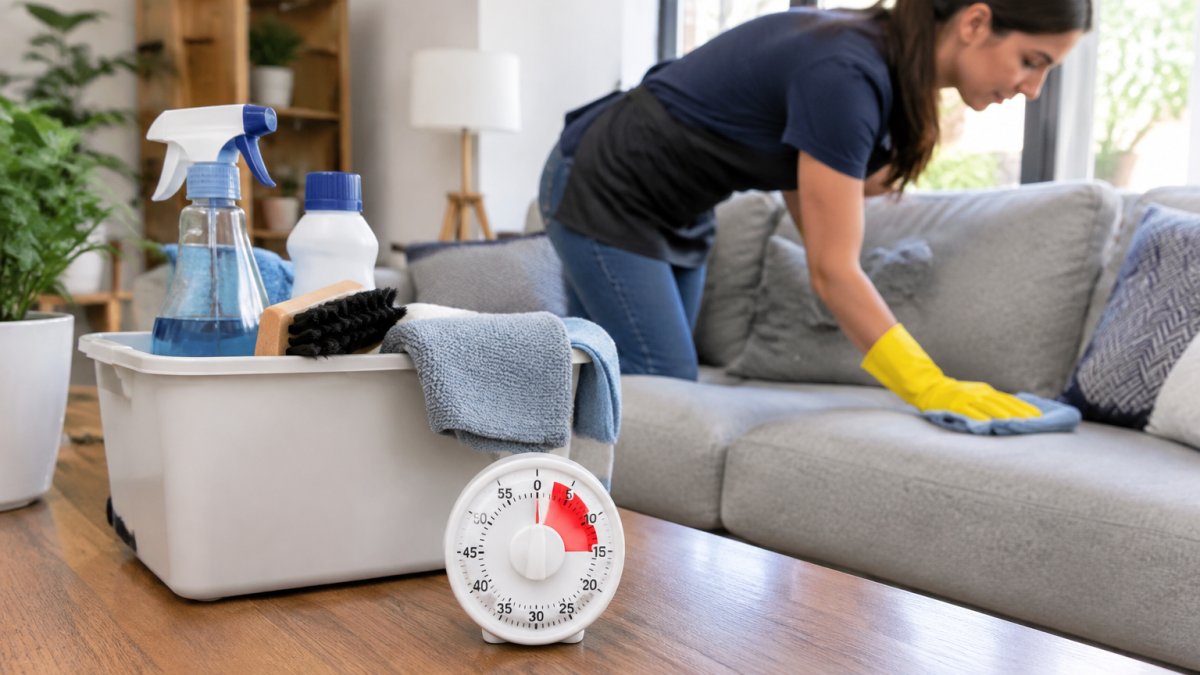
Set a timer, pick one task, and clean hard for 20 minutes. When it rings, stop and rest for 10.
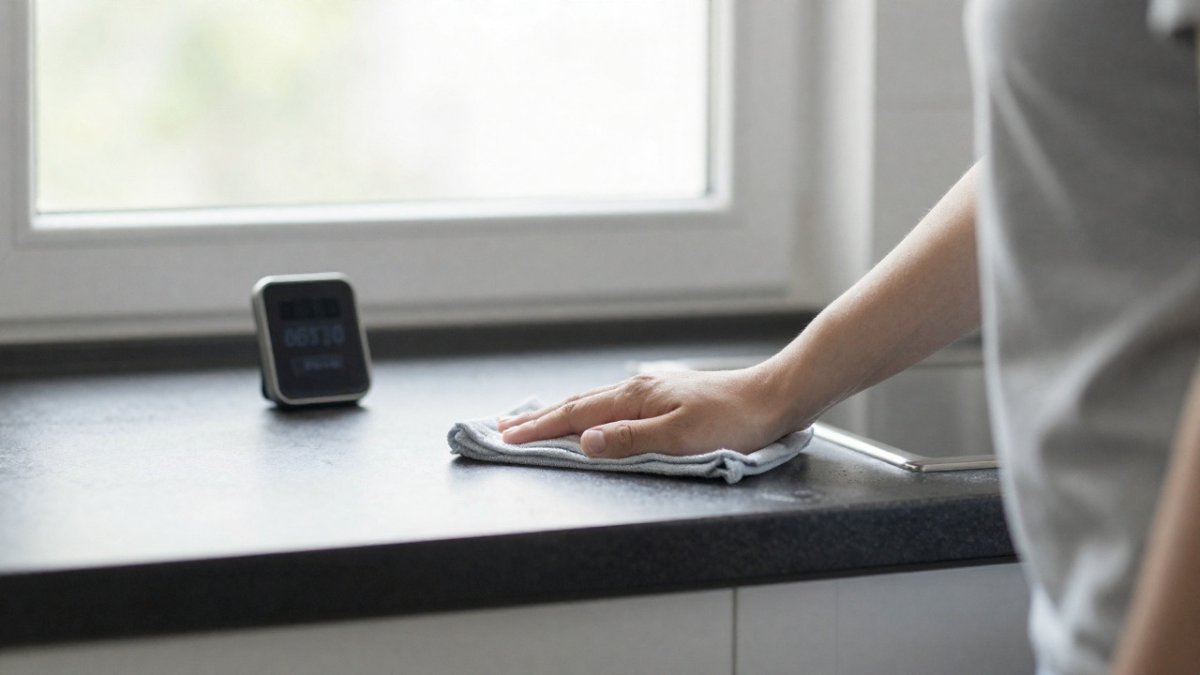
Choose one room or zone, set a visible timer, silence distractions, and work the full 20 minutes. Stop when the timer rings, even mid-task, take a genuine 10-minute break away from cleaning, then reset and repeat.
What to do when a task takes longer than 20 minutes
Some jobs won't fit in 20 minutes: a deep oven clean, an end-of-tenancy standard, a cluttered spare room. Split the task into 20-minute slices: "clean the oven" becomes "degrease the door," then "clean the shelves," then "do the trays." Pushing past the timer breaks the method, the break is part of the system.
Building a Room-by-Room Cleaning Checklist and Schedule for Busy People
A 20/10 cleaning schedule works best when each room has a short, written list. Use this room-by-room cleaning checklist as your starting point:
| Room | 20-Minute Focus | Repeat |
|---|---|---|
| Kitchen | Worktops, hob, sink, bin | Daily |
| Bathroom | Basin, loo, shower screen, mirror | 2-3 times weekly |
| Living area | Surfaces, cushions, floors, clutter | Daily |
This is steady progress rather than a deep clean, a 20/10 routine keeps a home tidy and liveable.
Adapting the method to your energy and needs
The 20/10 rule bends to fit the person: if 20 minutes is too much, try 10/5; if mobility is limited, sit for tasks at worktop height; if sensory sensitivities make strong products difficult, choose fragrance-free options and ventilate.
Safety and cleaning-product guidance
Never mix bleach with other cleaners, especially anything containing acid. Keep products in their original containers, store them out of reach of children, and follow the label (the NHS). The HSE guidance on hazardous substances sets out how to handle household chemicals safely, and it's worth a read before a big session.
For a proper deep clean or a move-out clean that meets a landlord's standard, a professional service takes the pressure off. Properties Maid Clean Ltd offers a personal allocated cleaner and a dedicated Client Hub for bookings and invoices, and you can get a quote from its website for current prices.
Frequently Asked Questions
What is the 20/10 rule for cleaning?
It is a work-and-break cycle: you clean for 20 minutes, then stop for 10. The short work period lowers the barrier to starting, and the scheduled break stops you burning out halfway through a room. Repeat the cycle as many times as your energy and diary allow. It suits people who find a full afternoon of housework off-putting, because each session has a clear start and finish rather than an open-ended task list.
How many 20/10 cleaning sessions should I do?
Most people manage two to four cycles in one sitting, which is 60 to 120 minutes of actual cleaning once breaks are counted. For a weekly routine, one or two cycles on a weekday plus a longer block at the weekend keeps on top of kitchens, bathrooms and living areas. If you are catching up after a busy spell, spread the cycles across several days rather than stacking them, and use a room-by-room cleaning checklist so each session has a defined target.
Can the 20/10 rule help with deep cleaning?
It can get you started, but treat it as steady progress rather than a guaranteed deep clean. A 20-minute session suits one focused job, such as descaling a shower or clearing a cupboard, so a full deep cleaning checklist will take several cycles spread over days. For end-of-tenancy or move-out standard cleaning, where every surface and appliance needs attention, a professional service is usually the quicker route.
The 20/10 rule won't clean your home for you, and it won't replace a proper deep clean when one is due. What it does is make starting possible, and starting is where most cleaning plans fail. If you'd rather hand the whole job to a team that turns up reliably and does it consistently, get a quote from Properties Maid Clean Ltd and enjoy a home that stays clean without the mental load.